
Intel has been hovering near it’s 52-week low. With an attractive 4% dividend yield and trading at just 7.6 times earnings, you may be asking yourself if it’s time to take the plunge.
Its current price needs to be looked at in the context of its fundamentals, long-term prospects and its arms-race with Nvidia and AMD. The question of which of these companies will dominate the industry is outside the scope of this article, but suffice to say, Intel is trading at about 1.4 times its book value and despite its dwindling revenues, it continues to be the dominant player in the American semiconductor space.
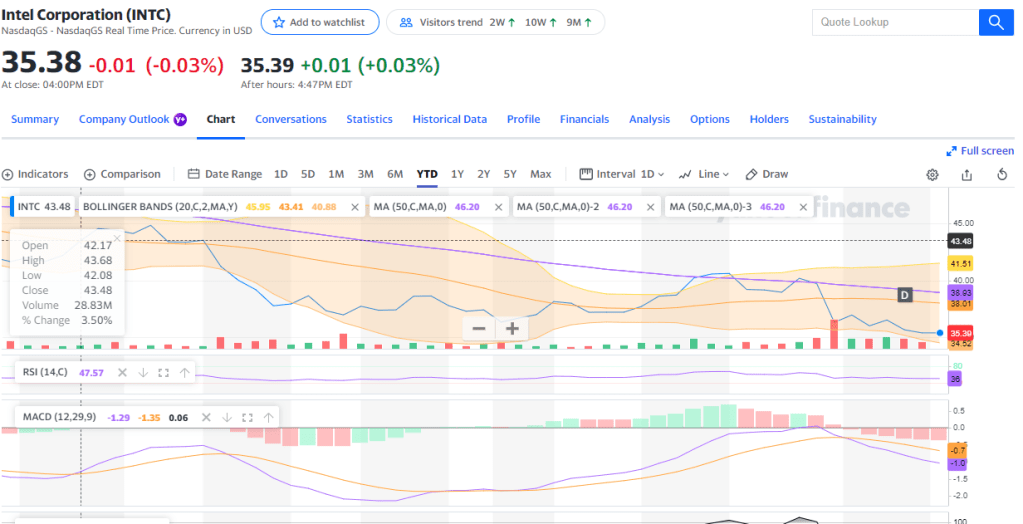
That throat-clearing aside, the fundamentals seem attractive. In addition to being near its 52-week low, Intel is also trading near the bottom of its Bollinger Band.
The option play
With an implied volatility in the low 30s, Intel’s options may not be the most lucrative, but they’re certainly worth taking a look at. Given its proximity to its 52-week low and it’s history of dividend rate hikes, selling puts a month out might be a fairly low-risk play.
With its disappointing earnings report now firmly in the past, I like the $34 strike with a delta of about .31. This translates to an annualized return of about 23%.
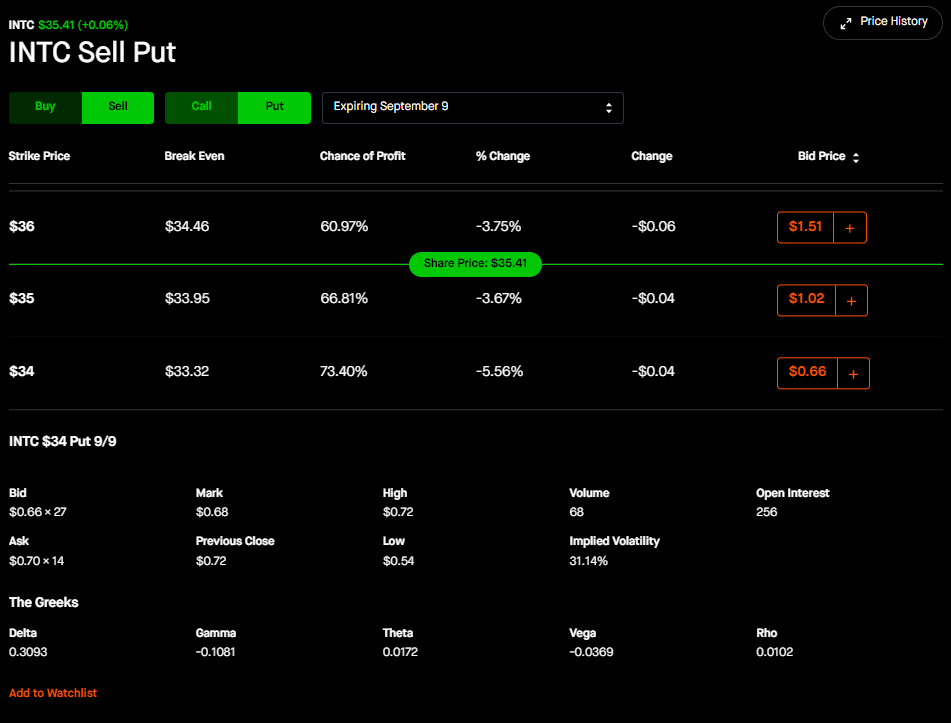
Alternatively, if you wouldn’t mind owning the stock, you can risk selling a put that’s closer to the money. A strike of $35 will yield an annualized return of about 31%. If you get exercised, you can immediately turn around and sell near-the-money covered calls to generate some lucrative premium income. The likelihood of Intel’s price sinking too far is low given its place in the Bollinger Band and the fact that the market has probably digested the worst conclusions of its last earnings report by now. The additional up-front income from the covered calls would significantly reduce your cost basis, which is why I’d recommend selling a near-the-money call option if you do decide to go with the $35 strike.
The put option premium you generate from either the $34 or $35 strikes in conjunction with the premium you collect selling near-the-money calls and that juicy 4% dividend would meaningfully reduce your cost basis and help cover your downside risk if your puts get exercised.
Where to trade options
I use Robinhood to trade options. I have other brokerages for my more passive portfolios and my 401(k), but I do not trade options on any of them.
I recommend Robinhood because of its easy to understand GUI and low fee structure.
Sign up here and get a cash bonus along with a free share of stock!
 Stock market analysis, tips and tools for investors - without any paywalls.